Mariechen Danz und
Johannes Paul Raether
Featuring KAYA
(Kerstin Brätsch und Debo Eilers) mit Nicolas An Xedro

Tobias Willmann [Fotografie]
Opening
09/15/18 at 2pm
Welcome
Dr. Ute Müller-Tischler
Head of Department Arts and Culture
Curated by
Nadia Pilchowski
Coordinated by
Tanja Paskalew
Education program
Marie-Christin Lender
Duration of the exhibition
09/16/18 – 10/21/18
Performances
09/22/18, at 12am to 4pm, Mariechen Danz,
Children workshop
09/24 + 09/25/18, 5 to 9pm, Johannes Paul Raether, ›Transformalor [Transformella malor] Bear Cave Cage Negentropy [4.4.6.9]‹
09/29/18, at 5pm to 9pm intricate interactions by Mariechen Danz, Johannes Paul Raether, KAYA with Nicolas An Xedro
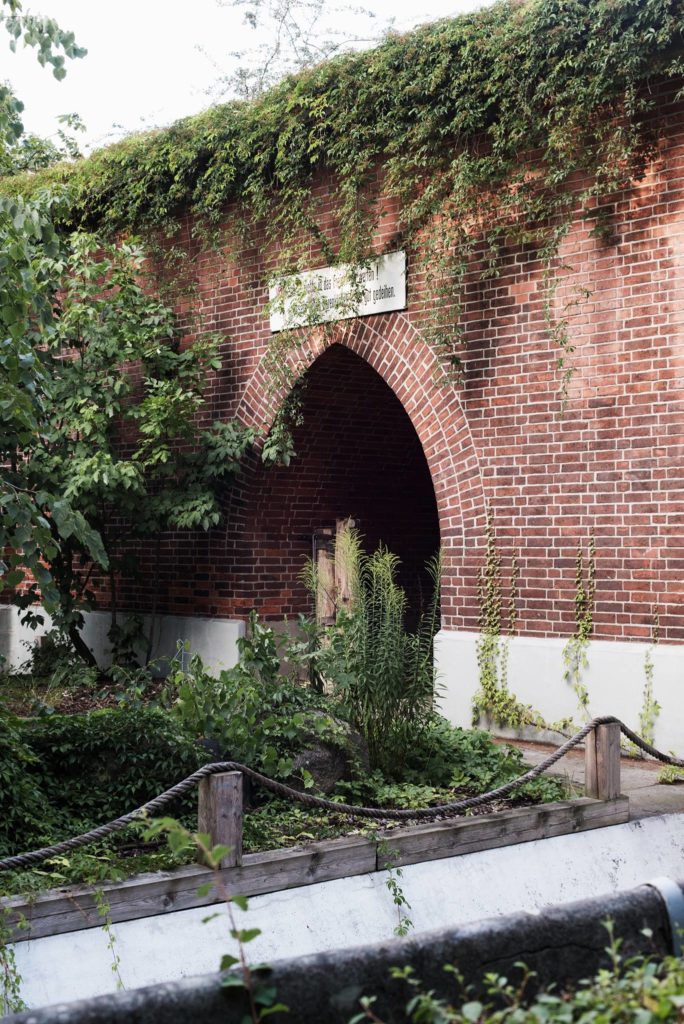
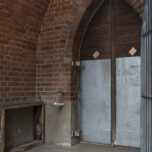
The exhibition “Aktive Asche“ by Mariechen Danz and Johannes Paul Raether featuring KAYA focuses on intricate transformational processes through which the concepts and materials integral to the artists’ practises undergo further intensification, metamorphosis, corrosion and incineration. The point of departure is embodiment and its language, ritual acts and the creation of a temporary community. At Bärenzwinger [bear pit], their individual cosmologies and form-changing qualities join forces to enter a collectively shared process.
In Mariechen Danz’s practice the body serves as a place for examining knowledge-transfer and communication.
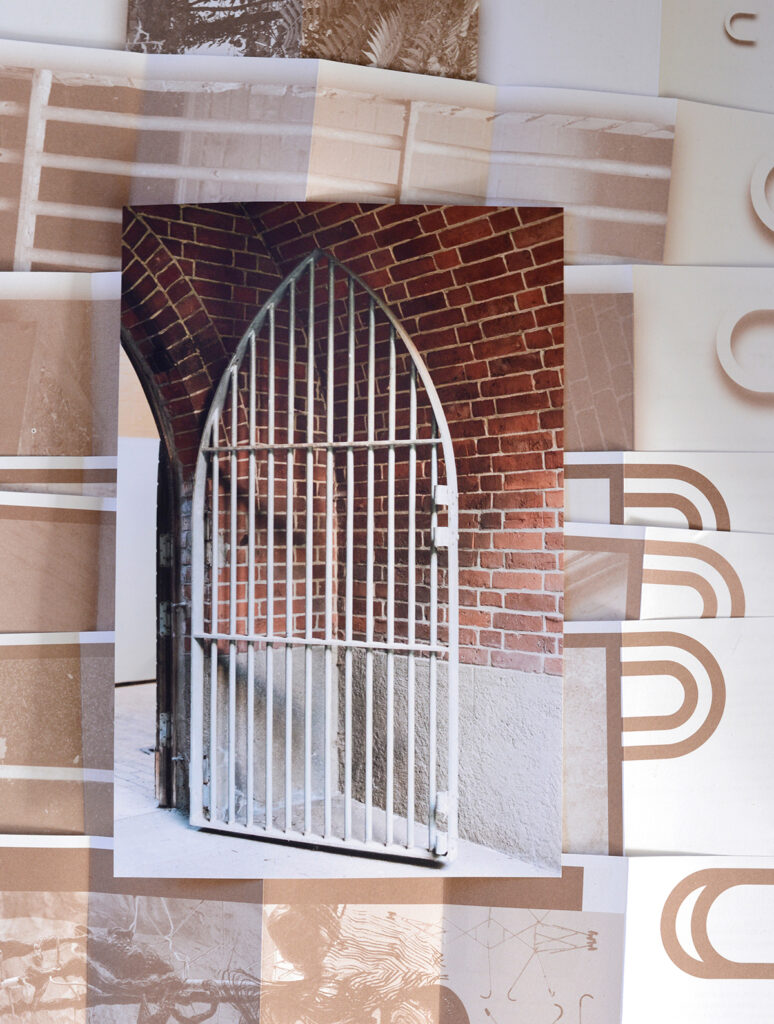
In the outdoor compound, the clay figure “Womb Tomb“ has been laid out. As it absorbs information from the environment, its form changes, finally becoming a coral-like fossilisation. Stretched over the figure is a cover with digital prints by Danz, KAYA and Raether.
In an appearance by Transformalor, who has emerged from Johannes Paul Raether’s figuration as SelfSister Transformellae evolving since 2010, his/her recombined Wächterinnen reposition themselves within the bear cages, wherein the plural being teaches about “ReproReality“, or the global market of human reproduction, and the coming “Reprovolution“.
In a second performance, Transformalor forks – at the moment of cremation – into a possible embodiment of entropic identity.
KAYA, acting as a fictional and concrete body, conjoin formal, painterly and metabolic procedures in their productions of identity. Within the bear pit, their “OraKle Paintings” (“Catacomb Mirrors”) carry the wishes of the participants from a workshop that recently took place at TROPEZ Sommerbad Humboldthain and amplify the sound piece by Nicolas An Xedro. As wish- and sound-paintings, they create a sound space and claim their position within a fictitious, metaphorical healing process that culminates in the performance “– KAYA_YO-NAH YO-HO (healing performance for a sick painting)”.


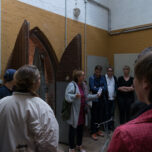


Mariechen Danz
Mariechen Danz, born 1980 in Dublin, Ireland, lives and works in Berlin.
Danz’s work takes communication and the transmission of knowledge as its starting point, placing the body at the center of her practice. In sculptures, drawings, costumes and installations she calls into question the expressive capabilities and incapabilities of language, the legibility and hierarchy of signs, and the primacy of Western conceptions of reason. Danz further activates her installations through staged vocal performances.
The human body functions as the primary place of investigation for Danz’ work – the body as a metaphor, as origin and remains.
Danz’ work has been featured in institutions such as Haus der Kunst Munich ; MAK Wien ; Centre Pompidou Paris ; Kunsthaus Bregenz ; New Museum New York; GAK- Gesellschaft für Aktuelle Kunst, Bremen; CAN Centre d’Art Neuchâtel and the 57th La Biennale di Venezia, curated by Christine Macel. She is currently part of ‘Agora’ on the High Line in New York. Danz is a recent recipient of the Berlin Senate Arbeitsstipendium, the Karl Schmidt-Rottluff scholarship and the Villa Romana Fellowship.
Johannes Paul Raether
Johannes Paul Raether born in 1977, Heidelberg, currently lives and works in Berlin.
The center of his work are the identities constructions such as Avataras, AlterIdentites or SelfSisters, by emerging at different public spaces, these colorful figures with made up from everyday objects, they bring up complex topics such as bio and reproduction industries, globalized tourism or occult substances in contemporary technology to the public.
Raether’s works and performances were shown at, among others, the 9th Berlin Biennale, Palais de Tokyo in Paris, Fridericianum in Kassel, Savvy Contemporary in Berlin. Recent solo exhibitions took place at District in Berlin, Transmission Gallery in Glasgow, and Ludlow 38 in New York City. Raether publishes in Texte zur Kunst and is currently Professor at the Kunstakademie in Düsseldorf.
KAYA
KAYA is a collaborative project, combining the independent practices of painter Kerstin Brätsch and sculptor Debo Eilers, both living and working in New York. The project refers to Kaya Serene, a young Texan who serves the artists as a focal and departure point for numerous exhibitions, performances, interventions, events and publications.
KAYA’s work has been shown around the world within exhibitions at Fridericianum, Kassel, MWoods, Beijing, Museum Brandhorst, Munich, KUB Kunsthaus Bregenz, Deborah Schamoni, Munich, Galerie Meyer Kainer, Vienna, and 47 Canal, New York amongst others and the works were included in the recent Whitney Biennial 2017, New York.
In 2018 KAYA has a solo exhibition at the Fondazione Memmo, Rome. KAYA (Kerstin Brätsch, 1979 Hamburg, Germany and Debo Eilers, 1974, Texas, USA)