Dates:
Act 1
For staying is nowhere.
June 12–14, 2026
Act 2
Does the cosmic space,
we dissolve into, taste of us then?
August 7–9, 2026
Act 3
Nowhere will world be, but within.
October 16–18, 2026
Loosely drawing on Rainer Maria Rilke’s Duino Elegies (1922), the artistic program of the Bärenzwinger unfolds in a four-part dramaturgy between 15 May and 18 October. Written over the course of ten years, Rilke’s cycle of elegies traces a movement of searching that begins with an invocation of places, people, and things from the past, and gradually leads to the question of how to engage with what is missing. Within the tension between conservation and transformation, the Bärenzwinger monument becomes both setting and stage for an artistic exploration of how loss might be approached in the face of an uncertain future.
Rilke’s response is not a resolution but a movement: memories do not survive through preservation alone, but by entering new contexts and changing in the process—thus opening a path for what does not yet exist. While the elegies themselves offer no final closure, the program sets a trajectory toward the tenth anniversary of the Bärenzwinger as a municipal gallery in 2027.
Curated by Luise Haubenreiser, Philipp Hennch, Pauline Kling, Kaya Peters, Nicola Reißer, Niva Sann and Josephine Steffens
Program Akt I
LINE UP
Friday, 12.06
7 – 10 PM
Listening Session
with theories
Saturday, 13.06
2 – 4 PM
How to perform a scream (I keep a roar in my mouth)
with Nadja Kracunovic
Workshop
5 – 6 PM
Lecture Performance
with Paula Schopf
7 – 8 PM
Performance
by Sofya Shaikut, accompanied by Katsia Kaya
Sunday, 14.06
2 – 3 PM
My deeds don’t fit my name
by Yasmeen Al-Qaisi
Radio-Performance
5 – 6 PM
SHOW ME THE BODY
by Agata Siniarska a.k.a. TATARI, with Ilya Subkoff
Performance Concert
Under the title For staying is nowhere, the first act of the program invites a form of invocation and explores ways of bringing what is hidden to the surface. Voice, sound, and bodily forms of expression intertwine to create a polyphonic tapestry. The program moves between the experimental sound works of DJ theories and a lecture-performance by Paula Schopf. It invites participants to engage in physical exploration through Nadja Kracunovics’s workshop How to Perform a Scream, brings together Butoh improvisation and soprano singing in the encounter between Sofya Sheikut and Katsia Kaya, and concludes with a radio performance by Yasmeen Al-Qaisi and a performative reverberation by Agata Siniarska.
Friday, June 12, 7–10 PM: Listening Session with theories
theories is an audiovisual artist and music collector from Bogotá, based in Berlin. For over a decade, she has explored the sonic spectrum with a focus on unexpected compositions, odd electronics, broken rhythms and subtle depth. Blending atmospheric soundscapes with spontaneity, she creates immersive listening experiences between movement and stillness. Her sets invite audiences into layered sonic narratives shaped by imagination, harmony and rhythm.
Saturday, June 13, 2–4:30 PM: Workshop How to Perform a Scream (I Keep a Roar in My Mouth) with Nadja Kracunovic
How to Perform a Scream? is a workshop series exploring voice as a tool of resistance, memory, and collective disobedience. Through vocal exercises, text, spoken word, polyphony, and experimental choir practices, participants engage the voice as a site of personal and political histories. Led by Berlin-based interdisciplinary artist Nadja Kracunovic, the workshop draws on performance, crip theory, and critical pedagogy to challenge dominant narratives through sound and expression.
Saturday, June 13, 5–6 PM: Lecture performance with Paula Schopf
Paula Schopf is a Chilean-born, Berlin-based DJ, producer, sound artist, and researcher. Emerging from Berlin’s electronic music scene in the late 1990s as Chica Paula, she became part of the Chilean Connection alongside artists such as Ricardo Villalobos and Dinky. Today, her practice spans sound art, research, and education. Working with field recordings and synthetic sound, her installations and performances allow an engagement with aesthetic, social and political questions through listening.
Saturday, June 13, 7–8 PM: Performance by Sofya Shaikut, accompanied by soprano Katsia Kaya
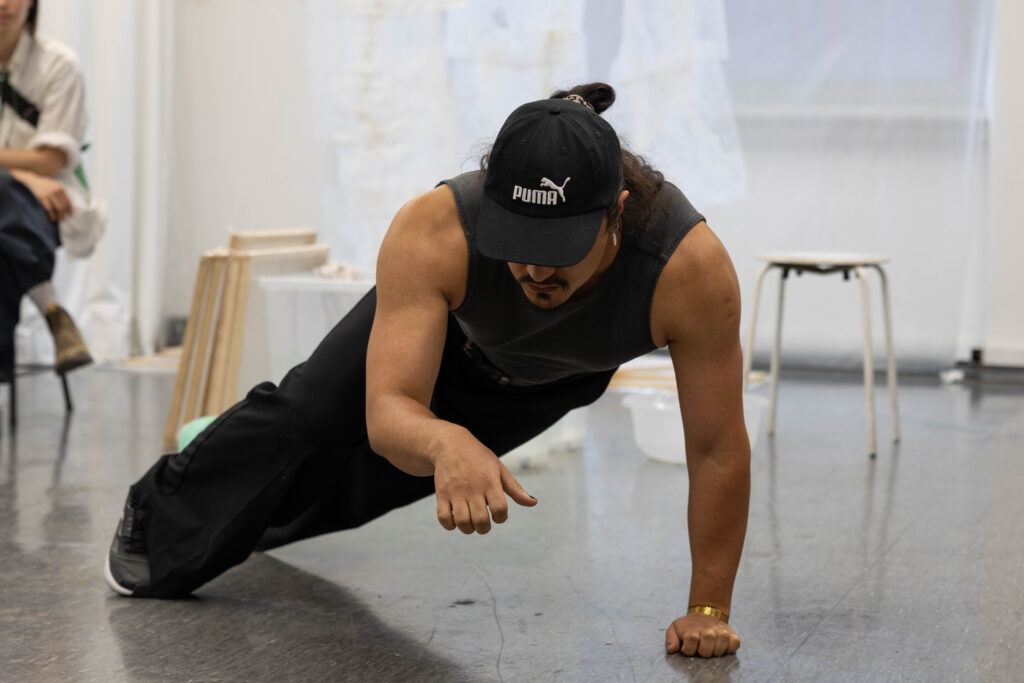
Sofya’s pieces are often invitations to become something else: an image, a rhythm, an unknown being. Her work is a shapeshifting practice grounded in butoh and inspired by the paradox of human un-humanness. She approaches choreography as a means of entering into relationship with the more-than-human, cultivating forms that possess the individual, transforming them into else. Her improvisations unfold as a continuous practice of becoming and unbecoming—welcoming unknown presences into the body and opening a path to the sacred through a body that forgets itself in the song of the dance.
Sunday, June 14, 2 – 3 PM: Radio Performance with Yasmeen Al-Qaisi
Yasmeen Al-Qaisi is a writer for voice and paper appearing sometimes in other forms such as a walking scientist, the schnelle musikalische hilfe service, or as the only agent for the self-entitled-self-entitlement-office. Yasmeen is as well listening with her hands and makes waves on free, independent, temporary, mobile radios and public radios writing with sound.
Sunday, June 14., 5 – 6 PM: Performance concert SHOW ME THE BODY by Agata Siniarska a.k.a. TATARI
SHOW ME THE BODY Agata Siniarska a.k.a TATARI body is not only what appears to be enclosed within the confines of the skin. The body is a conglomerate of different states, dynamics, textures and images. The body in its possibilities creates a multi-level landscape of movement and sound, it is a symphony of vibrational frequencies. SHOW ME THE BODY is a concert-performance in which the performer’s body travels through different intensities, rippling in all directions through movement and voice. Concept and performance: Agata Siniarska a.k.a TATARI in artistic collaboration with rat milk.
Program Act II
LINE-UP
Friday, 07.08
7 – 8 p.m.
BEARBONED
with Nina Guo
Experimental radioplay
in English
Saturday, 08.08
4 – 4:45 p.m.
Artist Talk
with Qusay Awad moderated by Rand Abou Fakher
5 – 6 p.m.
Fuça
with Marina Cyrino
Soundperformance
6:30 – 8 p.m.
DJ Set
mit DJ Sex
8:30 – 9:30 p.m.
I Was Better Until I Changed
with Bilgesu Akyürek und Buğra Büyükşimşek
Performance
Sunday 09.08
5:00 – 7:00 p.m.
Somatic Excercises
with Alvin Collantes and Thesea Rigou
With the second act, titled “Does the cosmic space, we dissolve into, taste of us?”, the artistic program running from August 7–9, 2026, focuses the theme of transformation. The opening act is Nina Guo’s radio performance BEARBONED on Friday evening. On Saturday, an artist talk with Qusay Awad will address the status of his artistic research project on the multifaceted history of the Bärenzwinger. This will be followed by a sound performance by Marina Cyrino, invited by Qusay Awad. The evening program features a set by DJ Sex, as well as the performance I was better Until I changed by Bilgesu Akyürek and Buğra Büyükşimşek, which explores healing as a process of simultaneous letting go and becoming. The event concludes on Sunday with somatic exercises led by Alvin Collantes and Thesea Rigou, which allow participants to physically experience the Bärenzwinger and the current annual exhibition “Furore” through guided movements.
Friday, August 7th, 7 – 8 PM: BEARBONED with Nina Guo
Nina Guos performance practice includes interpreting notated music and improvising. Radio and humor play large roles in her work. She often creates and voices a host of inventive characters.
Satuday, August 8th, 4 – 4:45 PM: Artist Talk with Qusay Awad moderated by Rand Abou Fakher
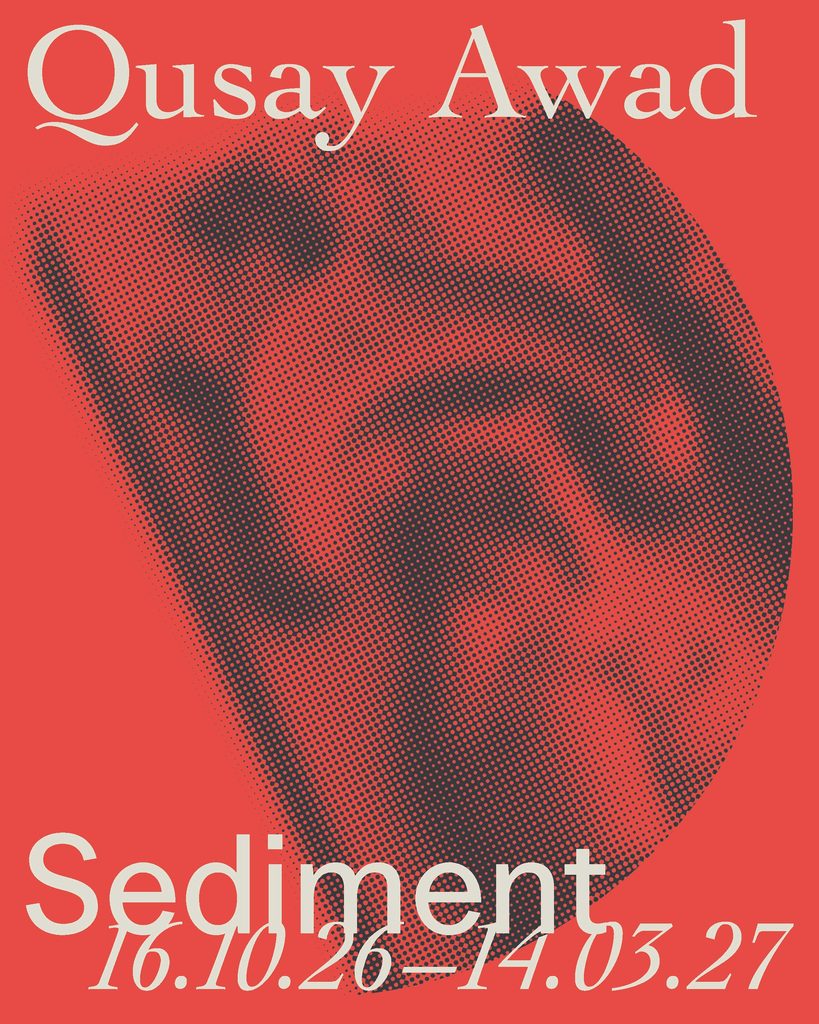
Architect and multimedia artist Qusay Awad is currently developing an artistic research project in response to this year’s annual theme, Heimsuchungen / Hauntings. The research envolves archival material, site-specific spatial observations and field recordings, the project investigates the Bärenzwinger as a place where multiple historical layers overlap. It asks how architecture stores memory and how traces of former uses continue to resonate within the site. Join us for an artist talk between Qusay Awad and moderator Rand Abou Fakher as they delve deeper into Awad’s artistic practice and his research process.
Saturday, August 8th, 5 – 6 PM: Fuça with Marina Cyrina
Marina Cyrino is a Brazilian flutist, sound artist and researcher based in Berlin. Her flute playing is shaped by techniques developed through the use of a hyper-amplification system, combined with a wide variety of DIY preparations, objects, toys and balloons attached to the instrument. Sometimes fabrication, sometimes deconstruction, sometimes fabulation, these techniques emerge from a search for a radical reimagining of how a flute could sound, reclaiming an intimate sonic imagination, an embodied materiality that challenges the masculine constraints of a heteropatriarchal tradition in both flute playing and flute construction.
Saturday, August 8th, 6:30 – 8 PM: DJ Set with DJ Sex
Saturday August 8th, 8:30 – 9:30 PM: I Was Better Until I Changed with Bilgesu Akyürek und Buğra Büyükşimşek
I was better until I changed explores healing as a fragile state rather than a linear journey. Through shifting identities, masks, ritual, and intimacy, the performance questions whether healing offers relief or demands the loss of who we once were. As performers mourn former selves and move between resistance and adaptation, the boundary between repair and erasure dissolves. The work leaves the audience with an open question: what kind of loss do we accept when we choose to heal?
Sunday August 9th, 5 – 7 PM: Somatic Excercises with Alvin Collantes and Thesea Rigou
Moderated by Alvin Collantes and Thesea Rigou, this workshop invites participants to explore the exhibition “Furore” by Nina Paszkowski, through movement and physical response. Over two hours, Alvin and Thesea will guide participants through individual and group exercises inspired by the exhibition, the architecture and history of Bärenzwinger. The workshop is open to all abilities – no prior experience is required. Wear comfortable, movement-friendly clothing and shoes.
The workshop concept was originally commissioned by KW Institute for Contemporary Art and developed by Thesea Rigou and Alvin Collantes, in cooperation with Alexia Manzano.