
The Bärenzwinger in Köllnischer Park
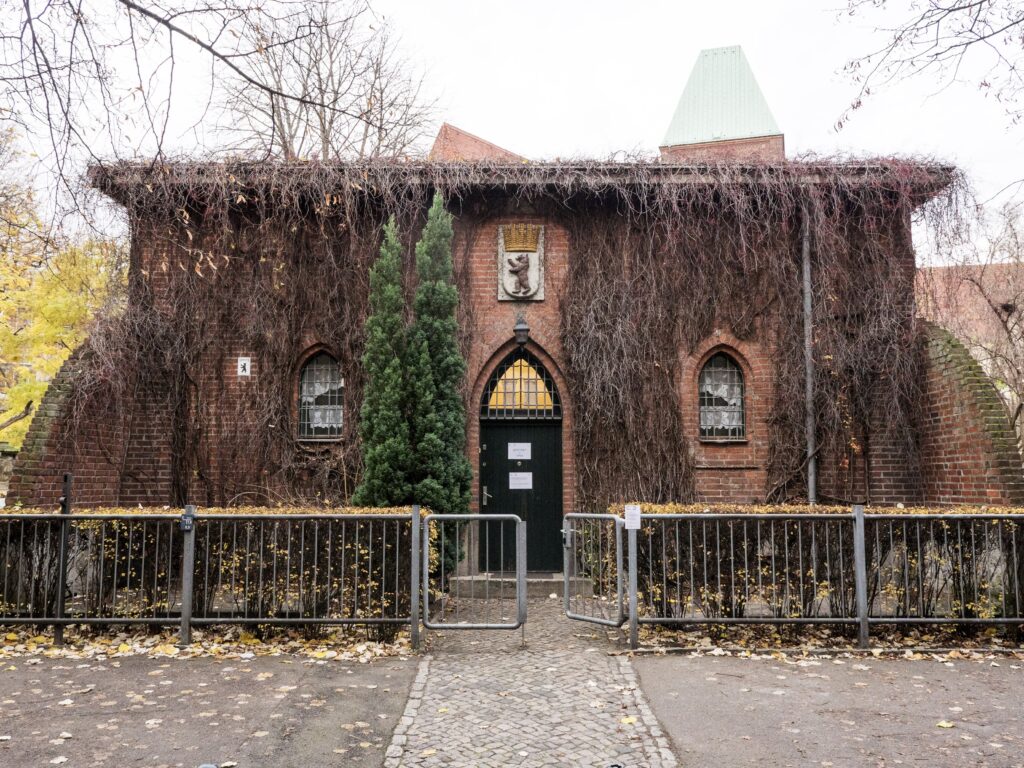
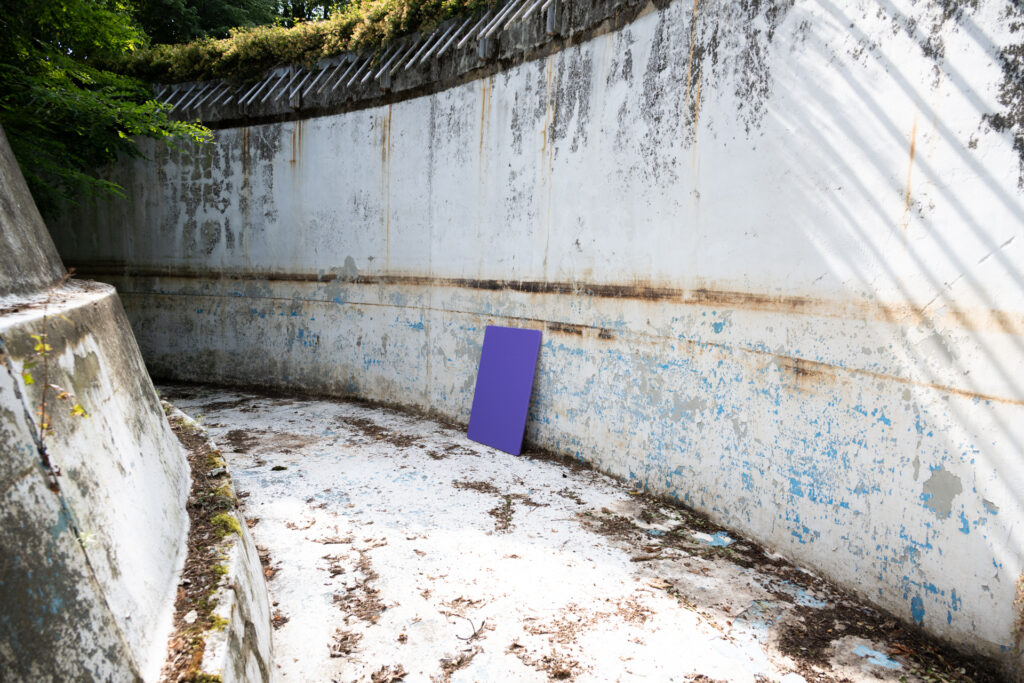
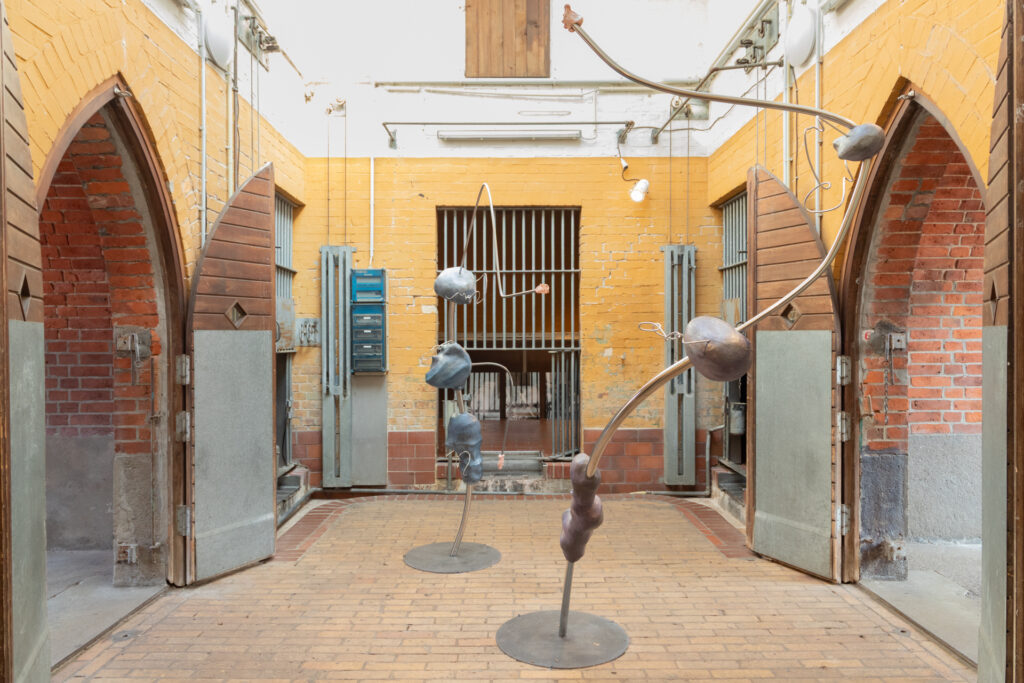
The Bärenzwinger in Köllnischer Park still bears numerous traces of its past use as the long-standing home of Berlin’s heraldic animals. Now artists and scientists are responding to the history of the site with site-specific interventions and spatial installations. Workshops and events establish connections to cultural urban design, the history of Berlin, and contemporary art. The bear pit has thus developed into one of the “most exciting places for contemporary art” (Kunstforum 2020) alongside the monastery ruins.
The curatorial program is designed by a changing team of research assistants from the Department of Art, Culture, and History. The exhibitions and events are dedicated to diverse forms and formats and explore the potential of the location for artistic positions.
In 2017, after almost two years of vacancy, the department took over responsibility for this cultural monument, which has developed into an urban attraction with a high level of recognition and popularity. The immense identity-forming effect of the Bärenzwinger on Berlin’s citizens is therefore also of exemplary value, both for future urban design in the northern Luisenstadt area and for the nearby historic center of Berlin. In this sense, the Bärenzwinger is being developed as a public cultural learning and teaching venue and as a knowledge platform for urban culture.


History
Until that day in autumn 2015, on which Schnute, the last female city-bear was euthanized, several generations of brown bears – Berlin’s heraldic animals – had inhabited the Bärenzwinger [bear pit] for almost eighty years.
The Bärenzwinger was officially opened on the 17th of August 1939 with the four bears Urs, Vreni, Lotte and Jule. Urs and Vreni came from the world-famous bear bit of Bern and were gifts from the city of Bern on the occasion of the 700th anniversary of Berlin in 1937.
What appeared to be a non-political initiative driven by public demand fitted in very well with the Nazi regime’s strategy of self-promotion and distracting the population. An interest in nature and the animal world was an integral part of National Socialist ideology. Native wildlife had to serve this mythologically charged worldview – including the bear as a symbol of strength and superiority. It was certainly no coincidence that bear pits were also being built at the same time in other parts of Germany – for example, in Ulm in 1939.
Originally built for the city’s sanitation department in Köllnischer Park, the Berlin architect Georg Lorenz converted it into the Bärenzwinger.
In early 1941, another bear arrived at the enclosure: ‘Purzel’, the ‘squadron bear’, formerly the mascot of an Luftwaffe flying squadron. Despite the state of war, it was decided to keep the bear enclosure open. The bears’ diet consisted of vegetables, some of which were grown on Alexanderplatz, horse meat and bread unfit for human consumption. In the final months of the war in 1945, the bear enclosure was severely damaged. Of the five bears, only one female, Lotte, survived and was taken to the Zoologischer Garten, where she lived until 1971.
Thanks to the efforts of local residents, the site was cleared of rubble and reopened on 29 November 1949 with the female bears Nante and Jette.
The preservation of the bear pit, located in the former East of the city, became a matter for debate shortly after the fall of the Wall due to its poor structural condition, until private donation initiatives finally set its restoration in motion.
Around the turn of the millennium, the keeping of the bears on the site encountered increasing opposition once again, this time because of doubts concerning the welfare of the animals. Criticism from animal welfare groups finally led to the municipal decision to discontinue the site’s usage as a bear pit after the death of Schnute.